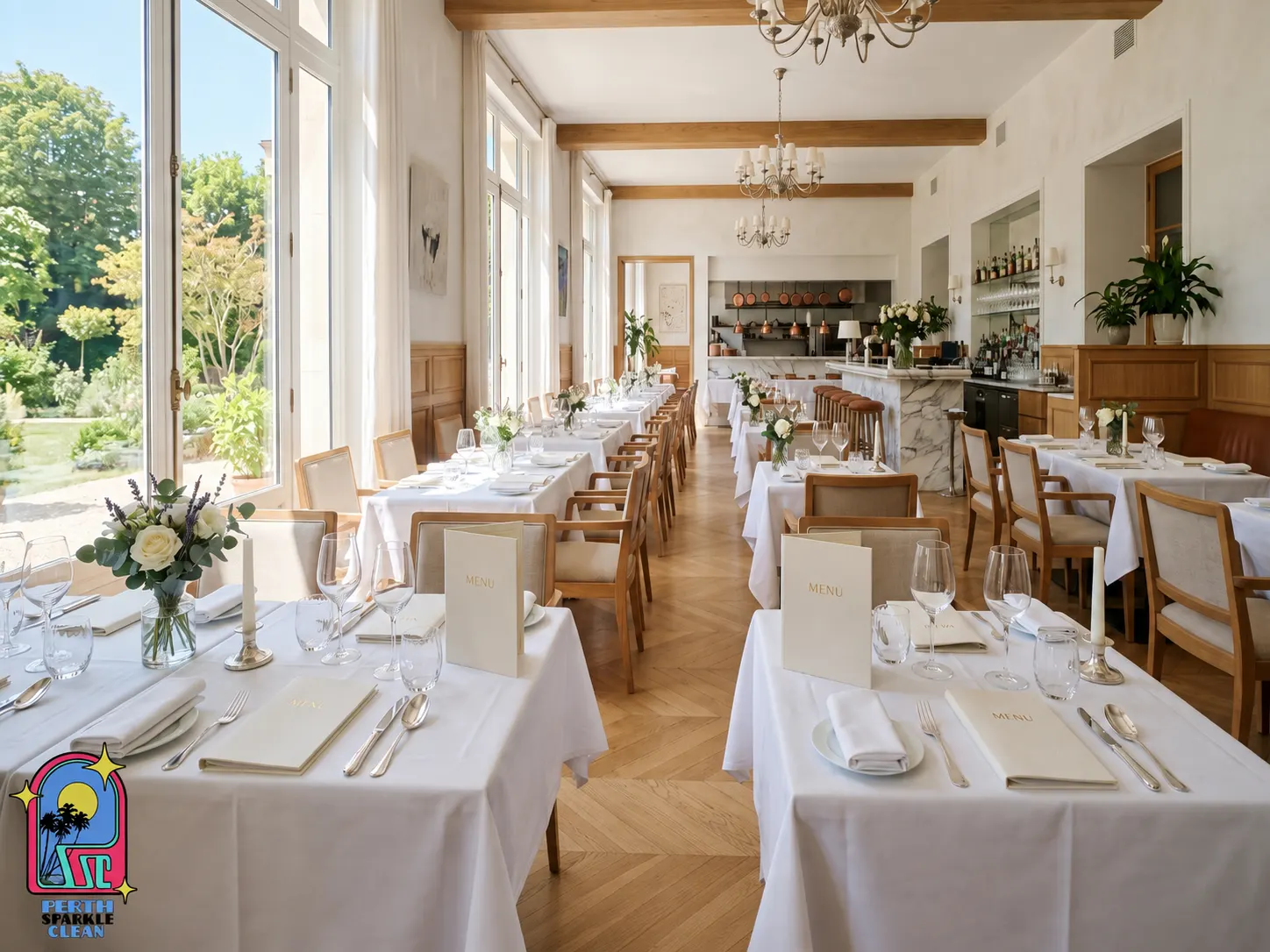
There is no single cleaning frequency that works for every restaurant or café in Perth.
A busy CBD café serving hundreds of customers throughout the day has different requirements from a small restaurant operating five evenings a week. Trading hours, customer traffic, venue layout, service periods and the areas included in the cleaning scope can all influence how often professional cleaning is required.
For that reason, an effective restaurant cleaning schedule in Perth should not begin with a generic rule such as "clean everything daily" or "book a deep clean once a month".
It should begin with the venue itself.
The objective is to establish a cleaning frequency that supports consistent presentation without interfering unnecessarily with restaurant operations.
For Perth Sparkle Clean, this means assessing how the venue operates, identifying the areas requiring regular professional attention and agreeing on a cleaning scope and service schedule that reflects those requirements.
How Often Does a Restaurant or Café Need Professional Cleaning?
The appropriate frequency depends on how quickly different areas of the venue become affected by normal use.
A high-volume restaurant may require professional cleaning on most or all trading days. Another venue may achieve the required standard with several scheduled services each week.
The important point is that frequency should follow operational need rather than an arbitrary timetable.
Factors that can influence a restaurant or café cleaning schedule include:
- number of trading days
- opening and closing times
- customer numbers
- peak service periods
- venue size and layout
- floor types
- bathrooms and other shared facilities
- entrances and front-of-house areas
- dining and customer-facing spaces
- seasonal changes in foot traffic
- the responsibilities handled by venue staff
- the agreed scope of the professional cleaning service
Two restaurants located on the same street can therefore require very different cleaning schedules.
This is why an on-site assessment is considerably more useful than trying to determine cleaning frequency from the size of a venue alone.
Restaurant Cleaning Frequency Should Follow Customer Traffic
Foot traffic is one of the clearest indicators of how frequently customer-facing areas may require attention.
Every customer entering a restaurant or café contributes to the normal accumulation of dust, debris, marks and general wear across floors, entrances and dining areas.
During busy periods, that happens considerably faster.
A café with a strong breakfast and lunch trade may experience concentrated traffic over several hours. A restaurant may instead have its highest activity during evening service and weekends.
The cleaning schedule should account for those patterns.
Rather than asking only, "How many times per week should the restaurant be cleaned?", a more useful question is:
How quickly does each part of the venue lose the presentation standard we want to maintain?
That shifts the decision from an arbitrary frequency to the actual needs of the business.
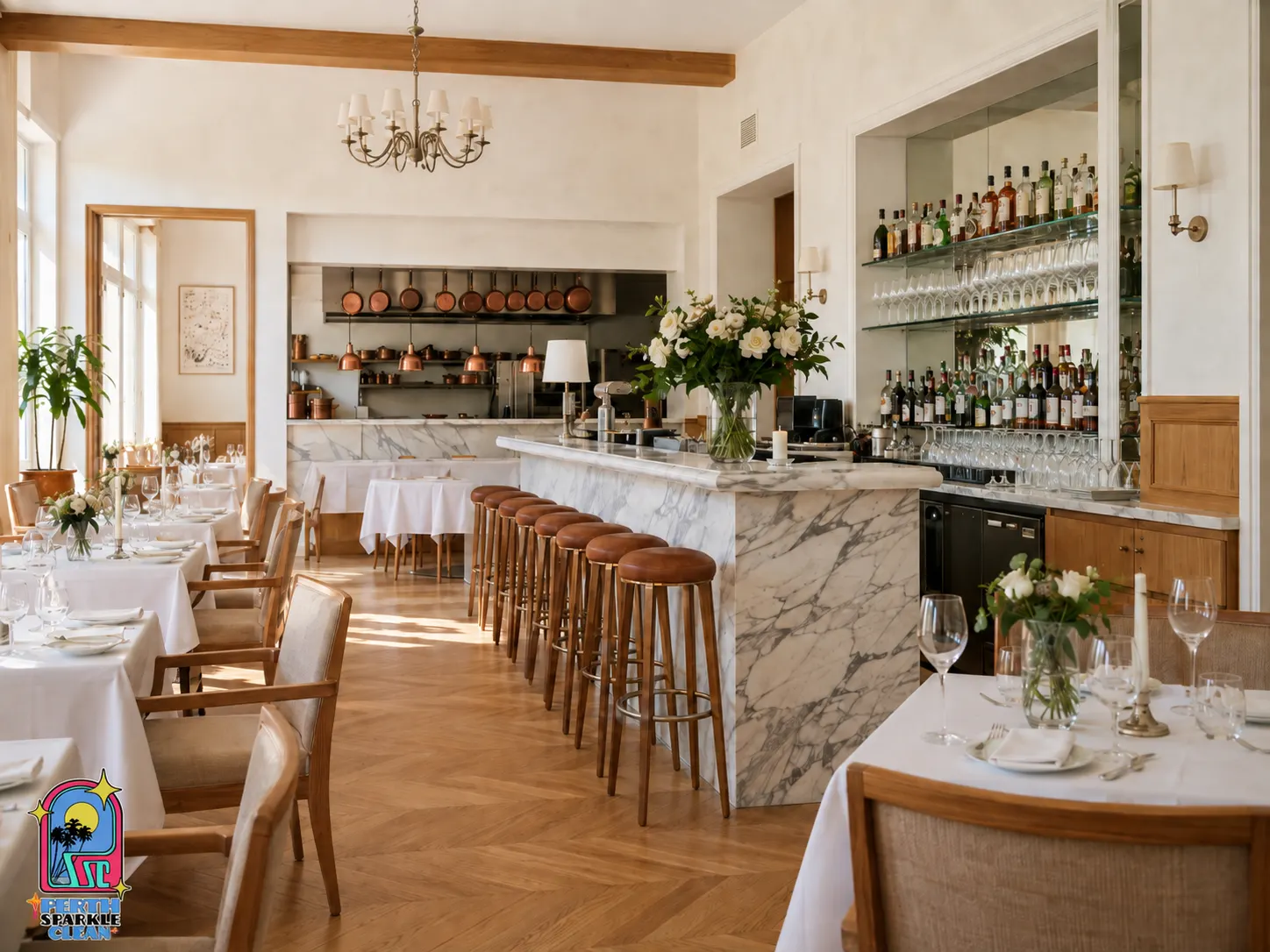
High-Traffic Restaurant Areas May Need Different Cleaning Frequencies
Not every part of a restaurant experiences the same level of use.
An entrance can receive constant foot traffic while another area remains relatively untouched. Bathrooms can require considerably more attention than low-use spaces. Dining areas may also vary depending on seating capacity and turnover.
This means a professional cleaning schedule does not necessarily need to treat every area at the same frequency.
Restaurant Entrances and Front-of-House Areas
The entrance is one of the first parts of a venue customers see.
Marks on glass, debris around entry points or visibly neglected floors can affect the impression of the venue before a customer has even reached their table.
For restaurants and cafés with substantial foot traffic, entrance and front-of-house presentation should therefore be considered carefully when establishing cleaning frequency.
The required professional service frequency will depend on how quickly those areas are affected between cleans and which presentation tasks are also managed by venue staff during operating hours.
Dining Area Cleaning Schedules
Dining rooms combine customer traffic, food service and constant movement by staff.
Floors, accessible surfaces and other agreed areas can consequently require regular professional attention.
However, professional restaurant cleaning should be distinguished from the operational cleaning undertaken by hospitality staff during service.
Clearing tables, responding to spills and maintaining immediate service areas are part of the venue's ongoing operations. A contracted professional cleaning service performs the tasks and areas defined within its agreed scope.
Understanding that distinction helps create a realistic cleaning plan rather than assuming an external cleaner is responsible for every cleaning activity throughout the day.
For more detail about defining that scope, see our guide to What's Included in a Professional Restaurant Cleaning Service in Perth.
How Frequently Should Restaurant and Café Bathrooms Be Cleaned?
Bathrooms deserve particular consideration because their condition can change quickly in a busy venue.
The appropriate professional cleaning frequency depends on factors such as customer numbers, operating hours, the number of facilities and the responsibilities assigned to venue staff between professional services.
A busy restaurant may need staff to inspect and maintain bathrooms during trading hours in addition to scheduled professional cleaning.
That distinction matters.
A professional cleaner arriving outside trading hours cannot replace the need for operational checks during a busy service period. Conversely, routine staff checks do not necessarily replace a more comprehensive scheduled clean.
The two functions should complement one another.
The objective is to establish clear responsibilities so the venue knows what happens during professional cleaning and what must be managed between services.
High-Touch Areas Need Attention Beyond the Professional Cleaning Schedule
Door handles, switches and other frequently touched surfaces can require attention more often than the contracted cleaning team attends the venue.
This is another reason why "three cleans per week" or "daily cleaning" does not tell the whole story.
Some tasks may form part of every professional service, while others require ongoing attention from venue staff according to operational requirements.
The cleaning scope should therefore identify responsibilities clearly rather than creating the impression that every cleaning requirement occurs at the same interval.
This approach is particularly useful for hospitality businesses because activity can change significantly between quiet periods and peak service.
Daily Restaurant Cleaning vs Several Services Per Week
For some Perth restaurants and cafés, professional cleaning on each trading day may be appropriate.
For others, several services per week may provide the required standard.
Neither option is automatically better.
When More Frequent Professional Restaurant Cleaning May Make Sense
A higher service frequency may be appropriate where a venue has:
- substantial daily customer traffic
- long trading hours
- multiple busy service periods
- heavily used customer bathrooms
- large dining or front-of-house areas
- floors that show marks or debris quickly
- consistently high presentation requirements
The decision should still be based on the individual venue rather than simply applying the same schedule to every hospitality business.
When Several Professional Cleans Per Week May Be Appropriate
Some lower-volume venues may not require the same professional cleaning frequency.
A café with shorter trading hours, fewer operating days or lower customer traffic may be able to maintain its agreed standard with several professional services each week, particularly when its own team handles appropriate operational cleaning between visits.
The key is consistency.
Reducing frequency to the point where the venue regularly falls below its expected presentation standard is unlikely to represent an effective cleaning plan.
Equally, scheduling unnecessary services provides little value.
The appropriate frequency sits between those two extremes.
Restaurant Cleaning Schedules Should Work Around Service Hours
Frequency is only one part of the decision.
When the cleaning takes place can be equally important.
Restaurants and cafés operate around preparation periods, deliveries, customer service, closing procedures and staff movements. A cleaning service that ignores those realities can create unnecessary disruption.
Depending on the venue, professional cleaning might therefore take place:
- before opening
- after closing
- between particular service periods where practical
- on selected non-trading days
- according to another agreed schedule
The correct arrangement depends on the business.
Perth Sparkle Clean's hospitality background is particularly relevant here. More than 20 years of hospitality experience means we understand that cleaning a customer-facing venue is not simply about completing tasks; the service also needs to work around the operational rhythm of the business.
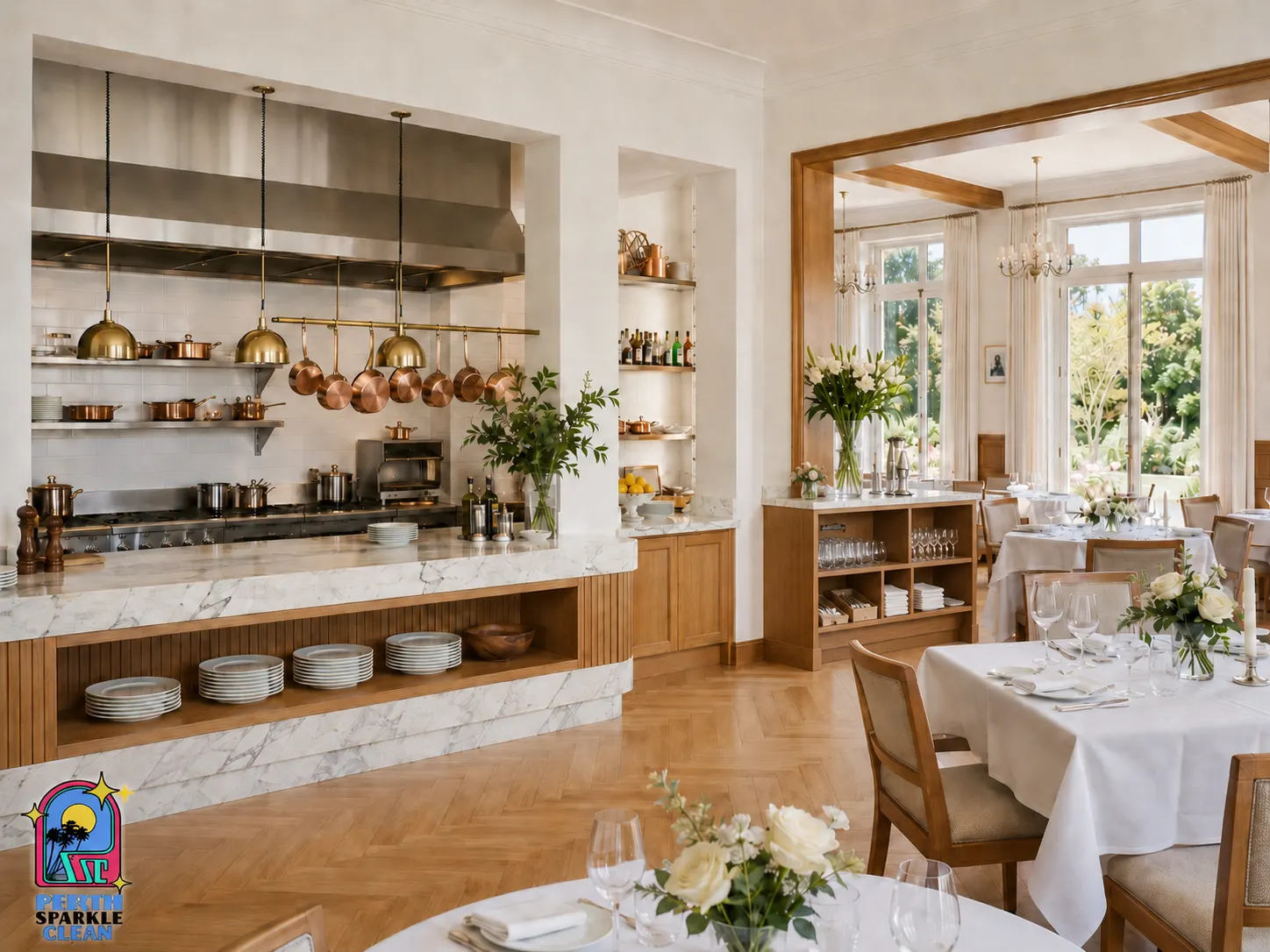
Cleaning Frequency Can Change During Busy Periods
A restaurant cleaning schedule does not necessarily need to remain identical throughout the year.
Customer volumes can change.
Seasonal trading, functions, special events, extended opening hours and particularly busy periods can all affect how quickly a venue requires attention.
A cleaning arrangement should therefore have enough flexibility to respond when the operating environment changes.
That does not mean continually changing the entire cleaning programme.
It means reviewing the schedule when there is a genuine operational reason to do so.
If a venue expands its opening hours, increases seating capacity or begins experiencing substantially greater customer traffic, its previous cleaning frequency may no longer be appropriate.
Likewise, requirements may reduce when operating conditions change in the opposite direction.
Cleaning Scope and Cleaning Frequency Need to Work Together
It is difficult to decide how often a restaurant should be professionally cleaned without first knowing what the professional cleaner is responsible for.
Cleaning frequency and cleaning scope are connected.
A service covering extensive front-of-house areas, bathrooms and floors may need to be scheduled differently from a more limited arrangement.
This is why Perth Sparkle Clean approaches restaurant and café cleaning through an agreed scope, rather than assuming that one standard checklist applies to every venue.
Our guide to what professional restaurant cleaning includes in Perth explains this distinction in more detail.
Once responsibilities are clear, an appropriate frequency can be considered for the actual work involved.
Why a Free On-Site Inspection Helps Determine Cleaning Frequency
A restaurant cleaning schedule is difficult to assess accurately without seeing the venue.
Floor area alone tells only part of the story.
An on-site inspection makes it possible to consider:
- venue layout
- customer flow
- entrances
- dining areas
- bathrooms
- floor surfaces
- accessibility
- operating hours
- peak periods
- existing cleaning responsibilities
- presentation expectations
Perth Sparkle Clean offers a free on-site inspection for Perth businesses so these factors can be discussed before recommending an appropriate cleaning scope and service schedule.
This creates a much stronger basis for a quote than trying to prescribe a cleaning frequency without understanding the venue.
Businesses looking at their broader hospitality cleaning requirements can also read our Restaurant & Café Cleaning Perth guide, which explains how our hospitality experience shapes our approach to customer-facing venues.
Professional Restaurant Cleaning and Food-Business Responsibilities
Professional venue cleaning should also be understood within the broader responsibilities of operating a food business.
Restaurant and café operators have obligations relating to food premises and food safety that extend beyond the scope of a contracted commercial cleaning service.
Food Standards Australia New Zealand provides official guidance and information for food businesses on food safety requirements and responsibilities.
A commercial cleaning provider can support the cleanliness and presentation of agreed areas, but should not be presented as replacing a food business operator's own responsibilities, operational procedures or regulatory obligations.
That distinction is important when establishing both the cleaning scope and its frequency.
How Perth Sparkle Clean Approaches Restaurant and Café Cleaning Schedules in Perth
We do not begin by telling every restaurant that it needs the same number of cleaning visits.
We first look at the venue.
The objective is to understand how the business operates, what areas require professional attention, when that work can be completed effectively and what standard the venue wants to maintain.
From there, an agreed cleaning scope and schedule can be developed around the actual requirements of the restaurant or café.
Our approach is backed by more than 20 years of hospitality experience, with particular emphasis on consistency, presentation and working around customer-facing operations.
If you are considering professional Restaurant & Café Cleaning in Perth, a free on-site inspection is the practical place to start.
It allows us to see the venue, discuss your operating schedule and recommend a cleaning arrangement based on the business rather than a generic frequency.
If you are comparing cleaning providers, our guide on how to choose a restaurant cleaning company in Perth outlines what to look for.
Frequently Asked Questions
How often should a restaurant be professionally cleaned?
There is no universal frequency for every restaurant. The appropriate schedule depends on customer traffic, operating hours, venue layout, bathrooms, floors, presentation requirements and the scope of work handled by the professional cleaner. Some venues may require professional cleaning on most trading days, while others may be suited to several services per week.
How often should a café be professionally cleaned?
A café's professional cleaning frequency should reflect its trading pattern and customer volume. A high-volume café operating seven days a week may require a different schedule from a smaller café with shorter opening hours. An on-site assessment can help determine an appropriate service frequency.
Does professional restaurant cleaning replace cleaning during service?
No. Hospitality staff may still need to perform operational cleaning and respond to spills, tables, bathrooms or other areas during trading hours. Professional cleaning covers the tasks and areas agreed with the cleaning provider.
Do all areas of a restaurant need to be cleaned at the same frequency?
Not necessarily. Entrances, bathrooms, dining areas, floors and other spaces can experience very different levels of traffic and use. An effective cleaning scope can account for those differences rather than applying the same frequency to every area.
Can a restaurant cleaning schedule change during busy periods?
Yes. Changes in trading hours, customer traffic, events or seasonal activity can justify reviewing the cleaning schedule. The aim is to maintain an appropriate standard while keeping the service aligned with the way the venue operates.
How do I know what cleaning frequency is right for my restaurant or café?
Start with the venue rather than a generic timetable. Consider customer traffic, operating hours, the areas requiring professional cleaning and what your own staff manage between services. A free on-site inspection can then help establish an appropriate scope and cleaning schedule.