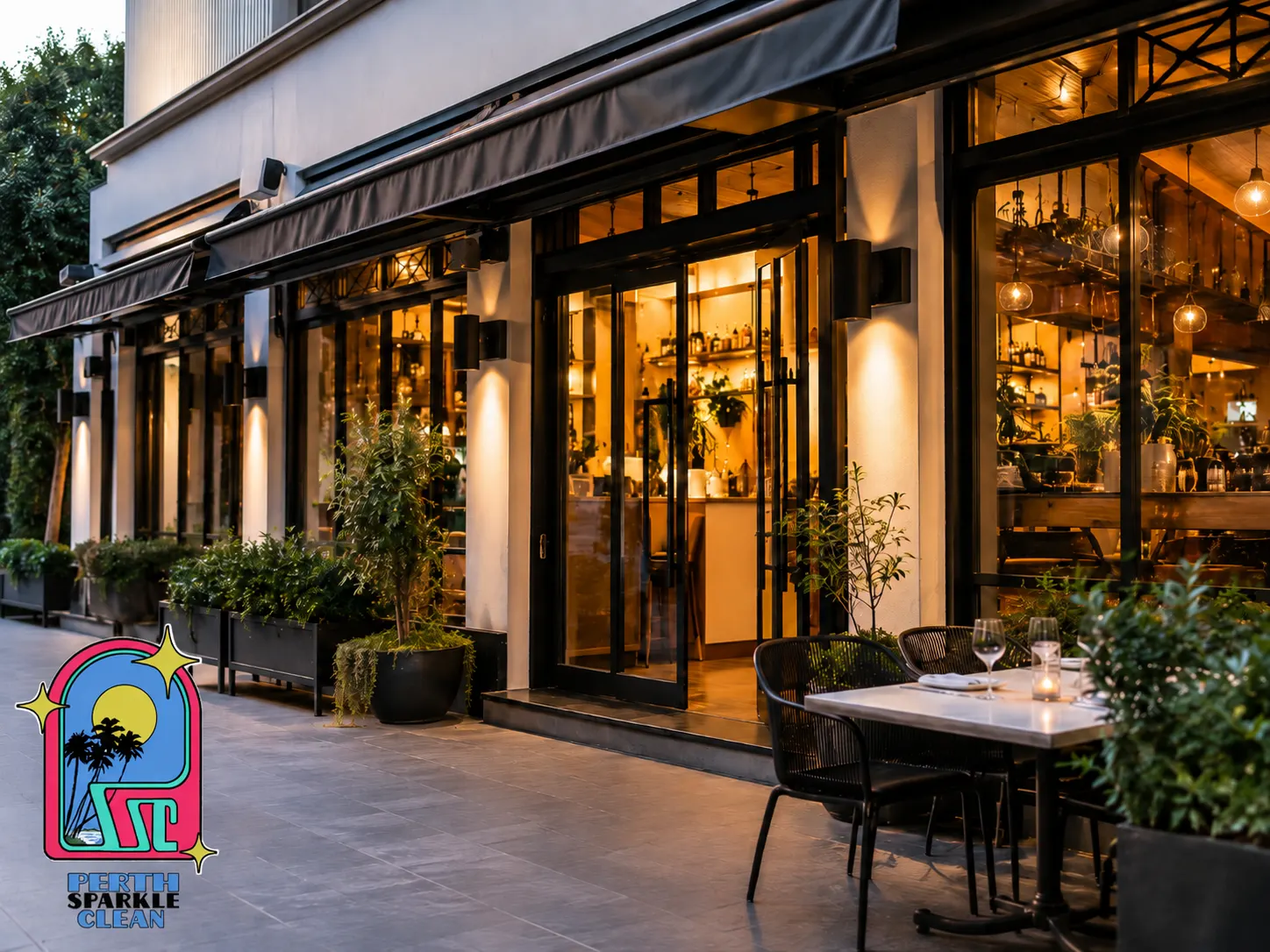
Professional restaurant cleaning in Perth should not begin with a generic checklist. It should begin with the venue itself.
A café serving breakfast seven days a week has different cleaning requirements from a restaurant operating mainly at night. A busy dining room, customer bathrooms, entrance areas and hard floors may also require different frequencies and levels of attention.
That is why the scope of a professional cleaning service should be agreed around the venue's layout, operating hours, customer traffic and presentation standards.
At Perth Sparkle Clean, our approach is informed by more than 20 years of hospitality experience. We understand that in a restaurant or café, cleanliness is not simply a maintenance task. It forms part of what customers see and experience when they visit.
Here is what a professional restaurant cleaning service can include, and why the exact scope should be tailored to the venue.
Restaurant Cleaning in Perth Should Start With an Agreed Scope
There is no single cleaning checklist that is appropriate for every hospitality business.
Before establishing a regular service, the cleaner should understand how the venue actually operates.
Important factors can include:
- venue size and layout;
- opening and closing times;
- customer volume;
- type of flooring;
- number of bathrooms;
- front-of-house configuration;
- frequency of service required;
- areas handled internally by venue staff; and
- areas assigned to the professional cleaning team.
This distinction matters.
Restaurant employees will normally perform operational cleaning throughout service. A professional cleaning company provides an agreed cleaning scope around those existing responsibilities.
Defining that scope clearly helps prevent both gaps and unnecessary duplication.
For a broader explanation of how professional hospitality cleaning supports restaurants and cafés, see our Restaurant & Café Cleaning Perth hospitality guide.
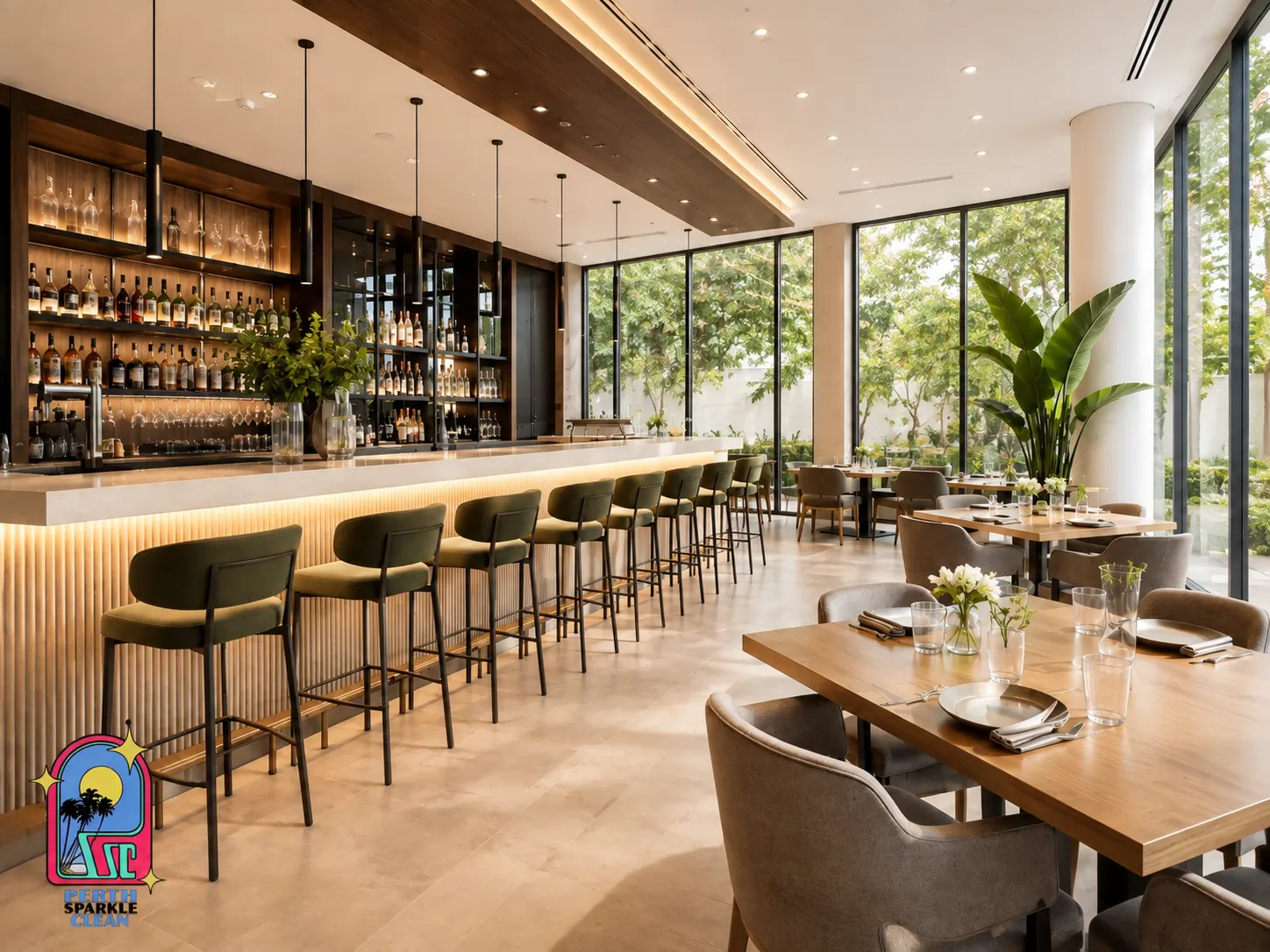
Dining Areas and Customer-Facing Spaces
The dining area is one of the most visible parts of a restaurant or café.
Floors, accessible surfaces and surrounding customer areas can quickly show the effects of food service, foot traffic and everyday use.
Depending on the agreed scope, professional cleaning may include tasks such as:
- vacuuming or cleaning floors;
- mopping suitable hard flooring;
- cleaning accessible surfaces;
- removing visible dust;
- cleaning skirting and selected edges;
- addressing marks in agreed areas; and
- maintaining the overall presentation of customer-facing spaces.
The objective is consistency.
Customers should not need to know that professional cleaners have been there. They should simply enter a venue that feels properly maintained.
Front-of-House and Entrance Cleaning
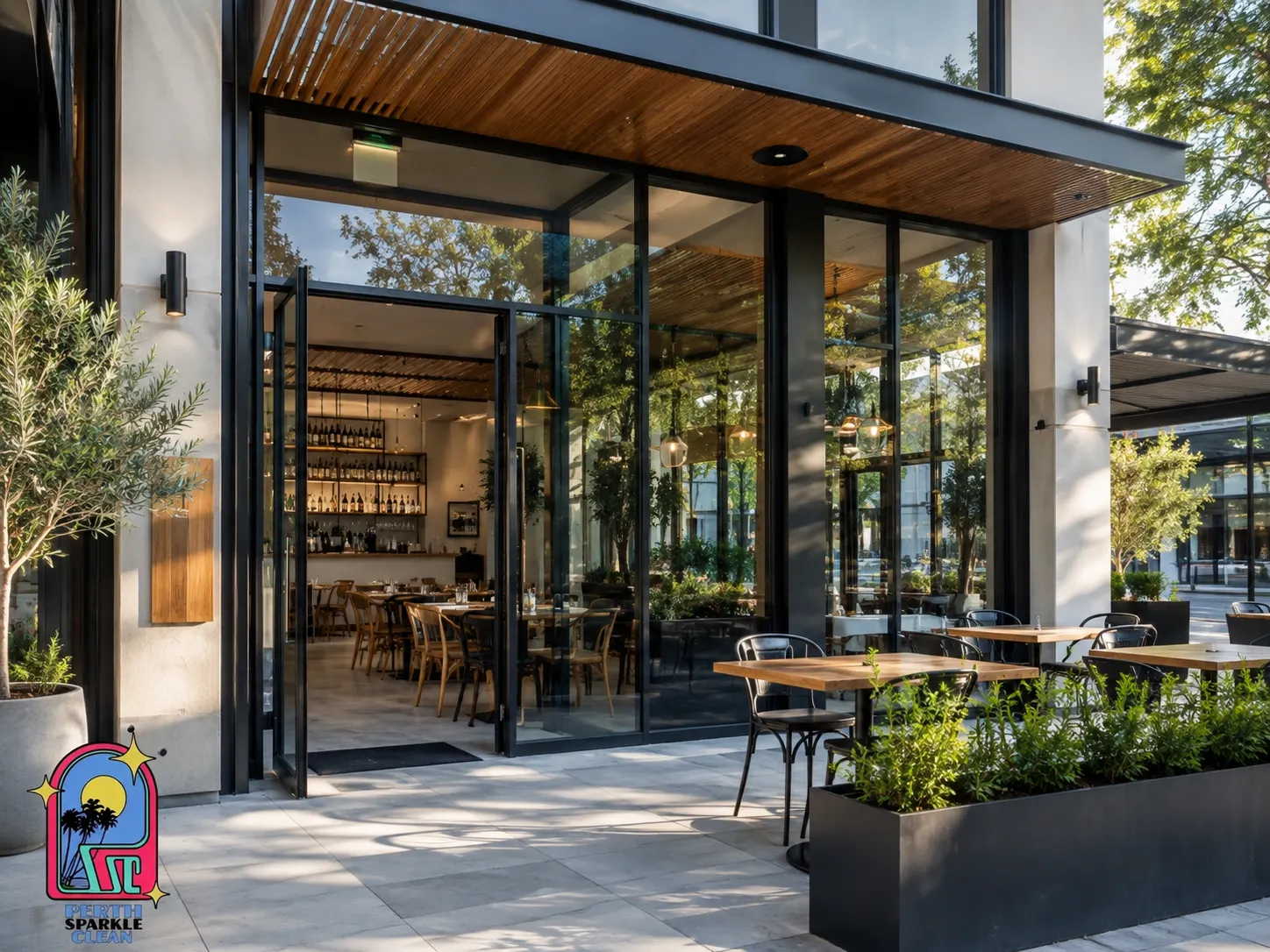
The customer experience begins before someone reaches their table.
Entrances, reception points, waiting areas and other front-of-house spaces contribute to the first impression of the venue.
Glass, flooring, visible surfaces and presentation details can therefore require particular attention.
This is where hospitality experience becomes valuable. Cleaning a customer-facing environment requires an understanding that seemingly small details can affect how the entire venue is perceived.
For restaurants and cafés, professional presentation begins at the entrance.
Restaurant and Café Bathroom Cleaning
Customer bathrooms are another high-priority area.
They experience frequent use and can strongly influence a guest's perception of the overall cleanliness of the business.
Depending on the agreed cleaning scope, bathroom servicing may include:
- toilets and urinals;
- basins and taps;
- mirrors;
- accessible surfaces;
- floors;
- bins; and
- agreed consumable checks or restocking arrangements.
The required frequency will depend on customer volume, opening hours and the way the facilities are used.
A busy hospitality venue may require a very different bathroom cleaning schedule from a lower-traffic workplace.
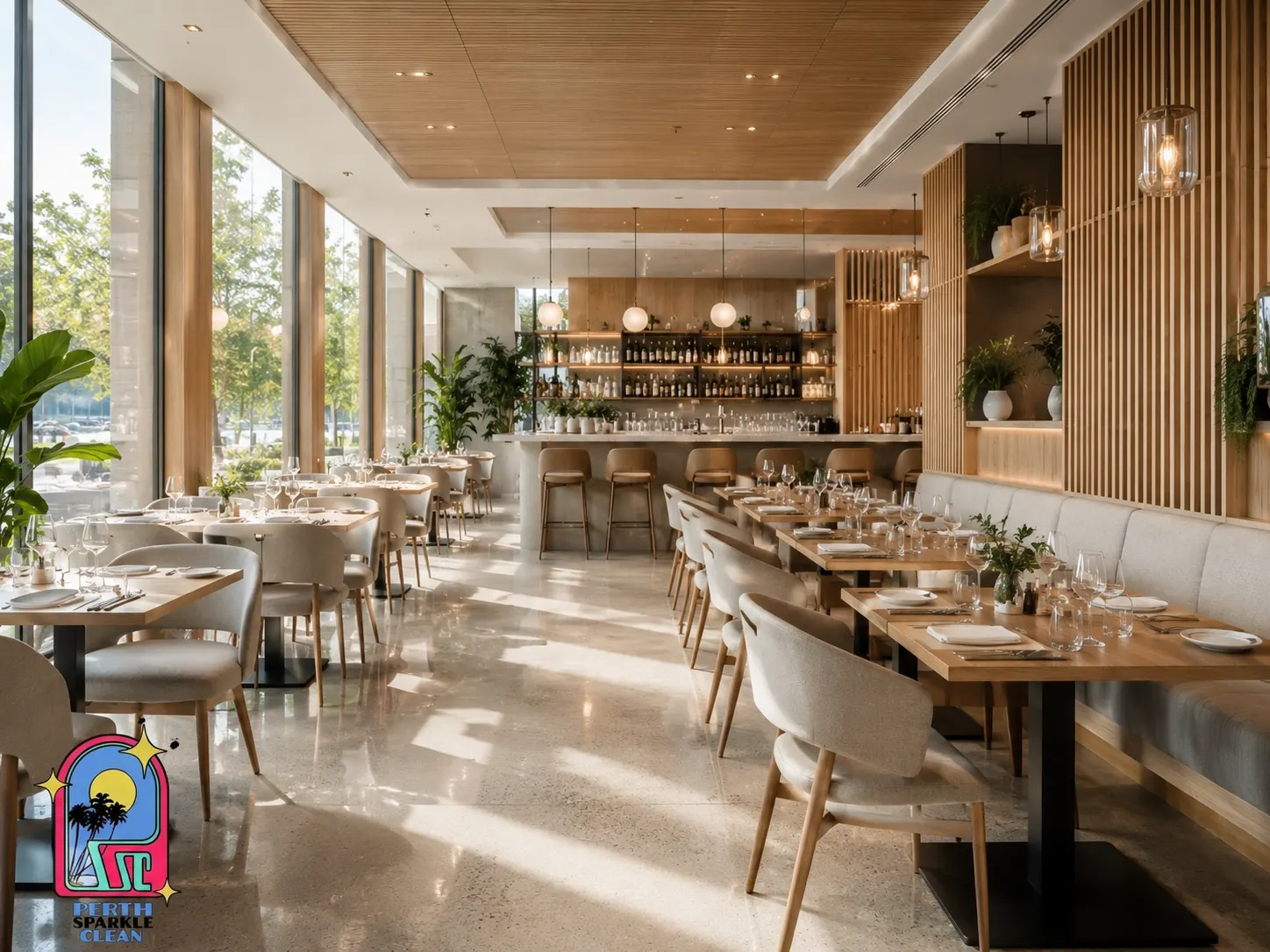
Floors and High-Traffic Areas
Restaurant and café floors deal with repeated foot traffic, food service and movement between different parts of the venue.
Different flooring materials also require different methods.
Tiles, polished concrete, timber-look surfaces and carpeted sections cannot simply be treated as one cleaning task.
A professional cleaning plan should identify the flooring present, the areas experiencing the greatest traffic and the appropriate maintenance requirements.
Entrances, routes between dining areas and bathrooms, and other heavily used sections may require particular attention.
High-Touch Surfaces in Hospitality Venues
Restaurants and cafés contain many surfaces that are touched repeatedly.
Depending on the agreed scope, these can include door handles, selected counters, switches and other frequently contacted surfaces.
They should be identified during the initial assessment rather than assumed to be part of an undefined "complete clean".
Clear scope definition is important because it tells both the venue and the cleaning provider exactly which responsibilities belong to the scheduled professional service.
Australian hospitality businesses also operate within broader food-safety obligations. The Australian Government's food-safety guidance provides useful information for businesses on maintaining appropriate food hygiene and safety practices.
What About Commercial Kitchens and Food-Preparation Areas?
This is an important distinction.
A professional restaurant cleaning service does not automatically mean every kitchen task, appliance, extraction system or food-preparation surface is included.
Commercial kitchens involve specific operational, food-safety and sometimes specialist cleaning requirements.
Some responsibilities may remain with restaurant staff. Others may require specialist contractors. Certain agreed cleaning tasks may form part of the regular professional service.
The correct approach is to establish those responsibilities explicitly during the site assessment.
That is safer and clearer than assuming that "restaurant cleaning" automatically covers every area and piece of equipment in the premises.
Bins and Waste Areas
Waste management is another important part of maintaining a hospitality venue.
Depending on the service agreement, professional cleaners may empty internal bins, replace liners and clean agreed surrounding areas.
However, external waste management, grease-related waste and specialised disposal should not automatically be assumed to form part of a standard cleaning service.
Again, the agreed scope determines responsibility.
How Often Should a Restaurant or Café Be Professionally Cleaned?
There is no universal frequency.
The appropriate schedule depends on how the venue operates.
Factors include:
- trading days;
- opening hours;
- customer numbers;
- venue size;
- floor types;
- bathroom usage;
- internal staff cleaning responsibilities; and
- the presentation standard the business wants to maintain.
Some restaurants and cafés may require professional cleaning every day. Others may use a different schedule combined with internal cleaning procedures.
The important principle is that cleaning frequency should follow actual venue usage.
We explore this question in greater detail in our dedicated guide to how often restaurants and cafés should be professionally cleaned.
Why Cleaning Around Service Times Matters
Hospitality businesses operate according to service periods, not conventional office hours.
Cleaning therefore needs to fit around the venue rather than interfere with it.
A suitable schedule might be arranged before opening, after closing or at another agreed time appropriate to the business.
The objective is straightforward: professional cleaning should support operations, not become another operational problem.
This is one reason an on-site assessment is more useful than attempting to quote a hospitality venue from a generic checklist alone.
Why Hospitality Experience Matters
Restaurants and cafés are customer-facing environments.
That changes the standard by which cleanliness is judged.
A cleaner needs to understand not only whether a task has technically been completed, but how the venue presents when customers arrive.
Perth Sparkle Clean brings more than 20 years of hospitality experience to this approach.
That background influences how we look at entrances, dining areas, bathrooms, presentation standards and the practical realities of working around hospitality operations.
It is not about making unrealistic promises of perfection.
It is about understanding what a guest-ready venue requires and establishing a cleaning service capable of supporting that standard consistently.
What Is Not Automatically Included in Restaurant Cleaning?
This is worth clarifying before engaging any cleaning provider.
Services such as specialist kitchen equipment cleaning, exhaust and extraction systems, grease traps, pest control, external high-access windows or other specialist work should not be assumed to form part of a standard restaurant cleaning agreement.
Requirements vary considerably between venues.
A professional provider should explain what is included, what is excluded and which responsibilities remain with your team or another specialist contractor.
Clear scope protects both parties.
If you are comparing providers, our guide on how to choose a restaurant cleaning company in Perth outlines what to look for.
Start With a Free On-Site Inspection
The most reliable way to determine what should be included in your restaurant or café cleaning service is to inspect the venue.
Perth Sparkle Clean offers a free on-site inspection so we can understand your premises, operating schedule and cleaning requirements before recommending an appropriate scope.
We can then establish the areas to be serviced, appropriate frequency and responsibilities before preparing a quote.
If you operate a restaurant or café in Perth and are considering professional cleaning, explore our Restaurant & Café Cleaning Perth service or arrange a free on-site inspection.
Frequently Asked Questions
What is included in professional restaurant cleaning in Perth?
The scope varies by venue. It can include dining areas, entrances, bathrooms, floors, accessible surfaces, high-touch points and agreed waste-related tasks. The exact inclusions should be established following an assessment of the premises.
Does restaurant cleaning include the commercial kitchen?
Not automatically. Commercial kitchens have specific food-safety and specialist cleaning requirements. Kitchen responsibilities should be clearly defined between venue staff, the regular cleaning provider and any specialist contractors.
How often should a restaurant or café be professionally cleaned?
It depends on trading hours, customer traffic, venue size, bathroom usage, flooring and the cleaning already performed by staff. High-use venues may require more frequent professional servicing.
Can restaurant cleaning be scheduled outside trading hours?
Yes, where operationally appropriate and agreed with the venue. The cleaning schedule should be designed to minimise disruption to restaurant or café operations.
Does Perth Sparkle Clean provide an on-site inspection?
Yes. Perth Sparkle Clean offers a free on-site inspection to assess the venue and establish an appropriate cleaning scope and schedule before quoting.
Why use a cleaner with hospitality experience?
Hospitality venues are customer-facing environments where presentation, timing and consistency matter. Experience in hospitality helps a cleaning provider understand these operational and presentation requirements.